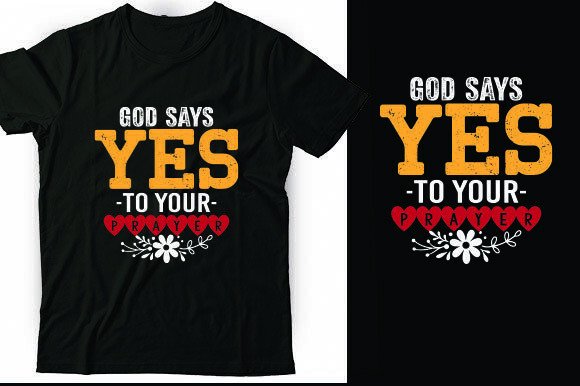
GOD SAYS YES to YOUR PRAYER
A Designer’s First Look: Warm, Uplifting—and Built for Real Stitching
When I opened GOD SAYS YES to YOUR PRAYER for the first time, I didn’t just scan the outline—I held it up against a soft heather-gray sweatshirt fabric swatch and imagined stitching it onto a custom tote bag for a local church fundraiser. That’s how I test designs: not as pixels on screen, but as finished pieces in real hands. This one landed with quiet confidence. The lettering is clean and rounded—not overly scripty, not sterile—carrying warmth without sacrificing legibility. There’s no ornate border or distracting flourishes; instead, the phrase itself carries the weight and rhythm. It feels like something a customer would choose for a meaningful gift, not a trend-driven impulse buy.
Where This Design Earns Its Keep
GOD SAYS YES to YOUR PRAYER shines brightest on mid-weight, stable fabrics where stitch definition matters: think cotton-blend sweatshirts, structured tote bags, linen tea towels, and baby bodysuits. I recently stitched it onto a 100% cotton apron for a small-batch boutique launch—and it read beautifully at 4.5 inches wide. The spacing between words allows breathing room for satin-stitched letters, and the overall width avoids crowding even on curved surfaces like the front chest panel of a youth-sized tee. As a T-Shirt Designs asset, it works especially well for faith-based apparel lines, pastoral care gifts, or personalized keepsakes for baptisms and prayer groups.
It also translates smoothly into embroidered patches. Because the design avoids ultra-thin lines or micro-details, it holds up well when cut, fused, and sewn onto jackets or backpacks. For Etsy sellers, that versatility means one digital embroidery file can support multiple product listings—tote bags, pillow covers, infant onesies—without needing separate adaptations.
Where to Pause—and Test Thoughtfully
This isn’t a “stitch-and-go” design for every surface. On highly textured fabrics—like bouclé knits or heavy terry cloth—the subtle curves in the letterforms can blur if stabilizer isn’t matched precisely to fabric weight. I recommend a medium-cutaway stabilizer for stretchy blends (e.g., cotton-spandex tees), and always test on scrap first. Also, avoid placing GOD SAYS YES to YOUR PRAYER too close to seams, hems, or curved brims (like baseball caps), where distortion can stretch letter proportions unevenly.
The phrase relies on clear contrast—so thread color choice matters more than usual. On dark fabric, a bright white or ecru thread reads with sincerity; on light fabric, navy or charcoal adds groundedness. Avoid pastel threads unless you’re intentionally softening the message for nursery decor. And while the design doesn’t feature tiny serifs or fine connectors, don’t skip inspecting the inner curves of the “G”, “R”, and “Y” in your embroidery software—some digitizers tighten those areas too aggressively, leading to skipped stitches or dense fill that puckers thin cotton.
What It Adds to Your Finished Product—Beyond the Thread
Customers don’t just buy words—they buy resonance. GOD SAYS YES to YOUR PRAYER carries emotional clarity. When stitched cleanly on a handmade kitchen towel or baby blanket, it signals intention, care, and quiet conviction. That elevates perceived value: buyers are more likely to gift it, display it, and keep it long-term. For craft businesses, that translates to stronger repeat engagement and word-of-mouth trust—especially among faith-centered communities who recognize authenticity over ornamentation.
It also supports brand consistency. Unlike whimsical or seasonal motifs, this phrase fits year-round merchandising—Easter, Mother’s Day, hospital visits, grief support, or everyday encouragement. As a digital embroidery file, it pairs naturally with minimalist mockups: a single line on a cream tote, centered on a charcoal sweatshirt, or scaled down for a delicate patch on a denim jacket collar. No need to over-design around it.
Practical Notes Every Embroiderer Should Run Through
- Always test on scrap fabric first—especially if using lightweight knits or dark backgrounds.
- Check thread color contrast before committing to a full run; print a black-and-white mockup to assess value balance.
- Review stitch density in the word “YES”—it’s the visual anchor, so over-stitching here can cause stiffness or shadowing.
- Confirm hoop size compatibility with your machine and intended garment placement (e.g., a 5x7 hoop works comfortably for most adult sweatshirt fronts).
- Inspect small details like the curve of the “S” and spacing before finalizing a commercial embroidery project.
- Use proper stabilizer: cutaway for knits, tear-away for stable wovens, and fusible + tear-away for layered items like quilted pillow covers.
- Verify licensing before selling finished products or listing the digital embroidery file—commercial use rights aren’t automatic, even for faith-themed designs.
Final Thought: A Design That Serves Its Purpose—Without Overreaching
GOD SAYS YES to YOUR PRAYER doesn’t try to be everything. It doesn’t shout. It doesn’t clutter. It simply lands with sincerity, clarity, and stitch-friendly structure. That makes it unusually reliable across contexts—from a last-minute personalized gift for a friend’s milestone to a curated collection for a small shop’s holiday launch. As an embroidery designer and reviewer, I don’t reach for this file when I need flash. I reach for it when I need meaning, readability, and quiet professionalism in every loop and satin column. For craft business owners, Etsy sellers, and makers building something real—not just decorative—this is the kind of T-Shirt Designs asset that earns repeat use, not just one-time downloads.